The Workstation Is the Extraction.
Capture that moves with the work
Extraction arms and hoods work when the emission source is fixed and accessible. In deburring, soldering, polishing, and manual grinding, the work moves constantly across the bench and the emission moves with it. A static capture point overhead or to the side misses part of what’s generated.
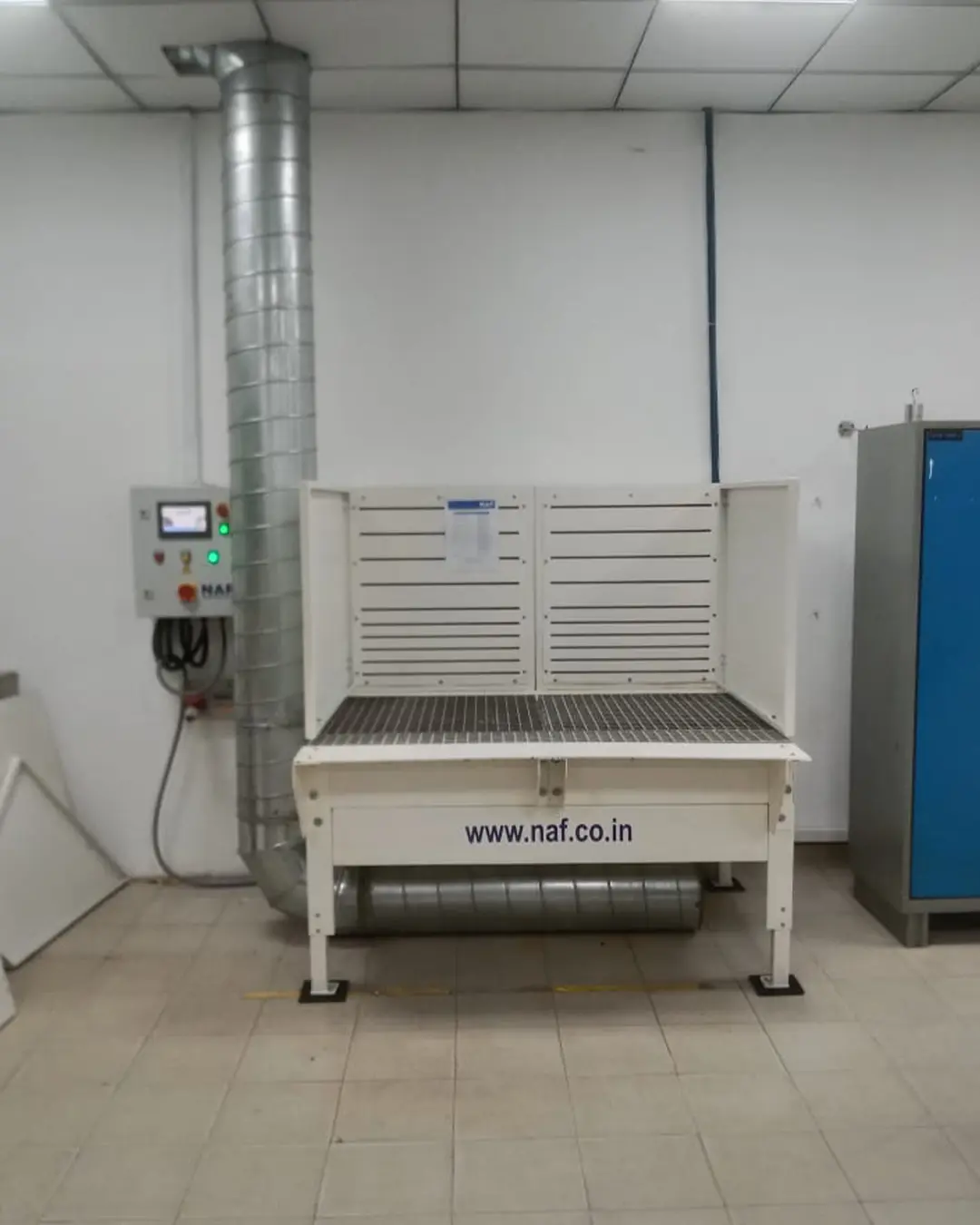
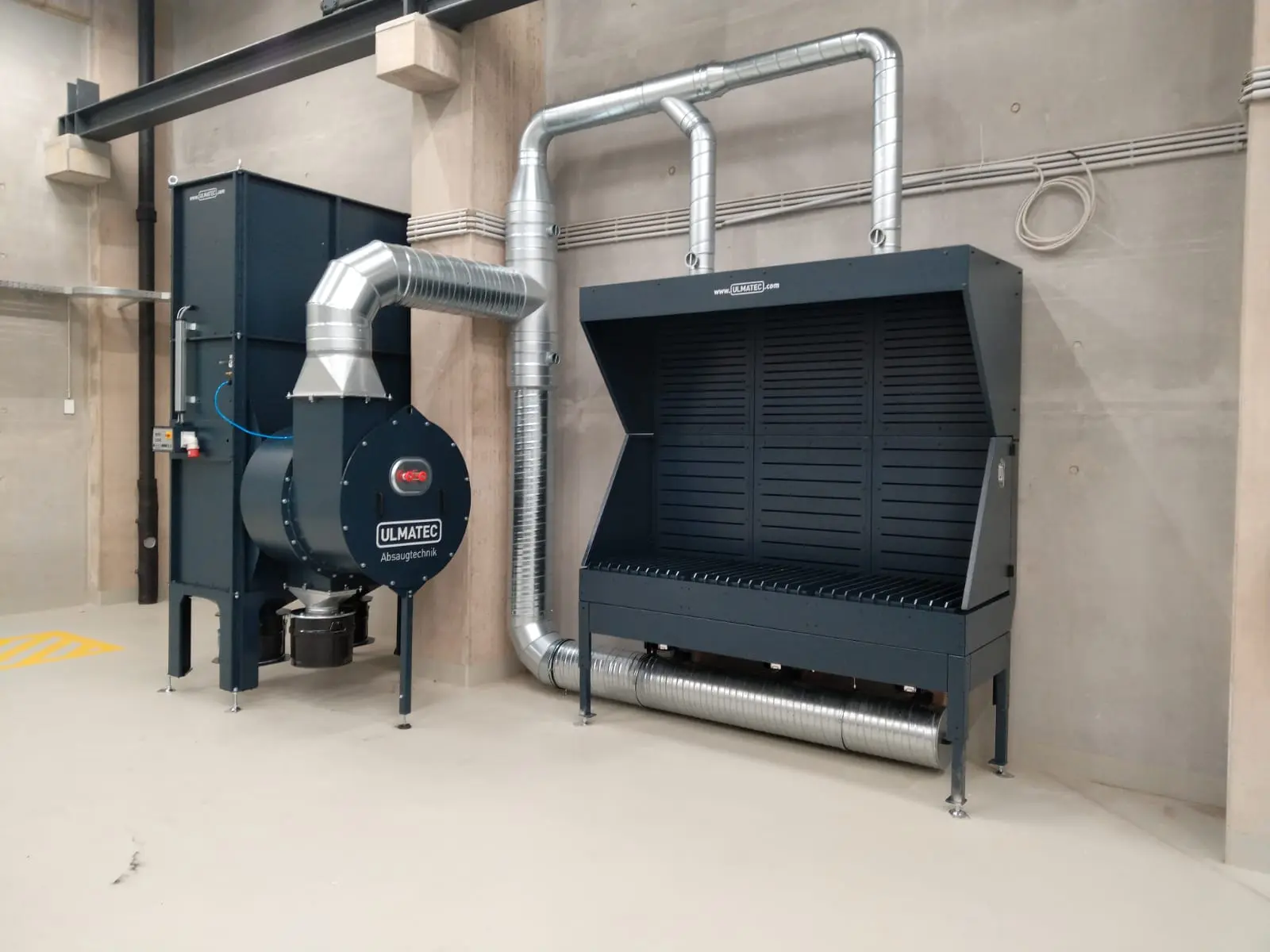
Extraction tables integrate the capture into the work surface. Air is drawn downward through the table top, capturing dust, chips, vapour, and fumes at workpiece level, before they rise to the breathing zone or disperse into the room.
NAF Extraction Tables, built under licence from ULMATEC GmbH and manufactured in India, are modular, ergonomically designed, and available in multiple surface configurations for the full range of industrial workstation applications.
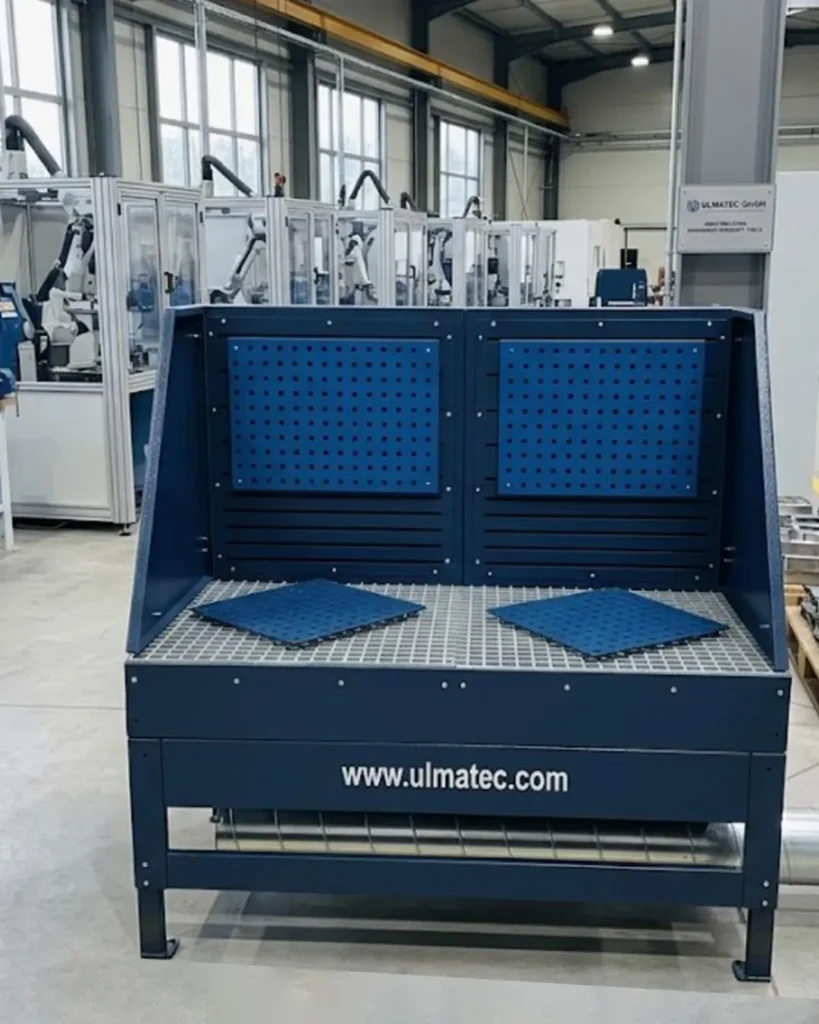
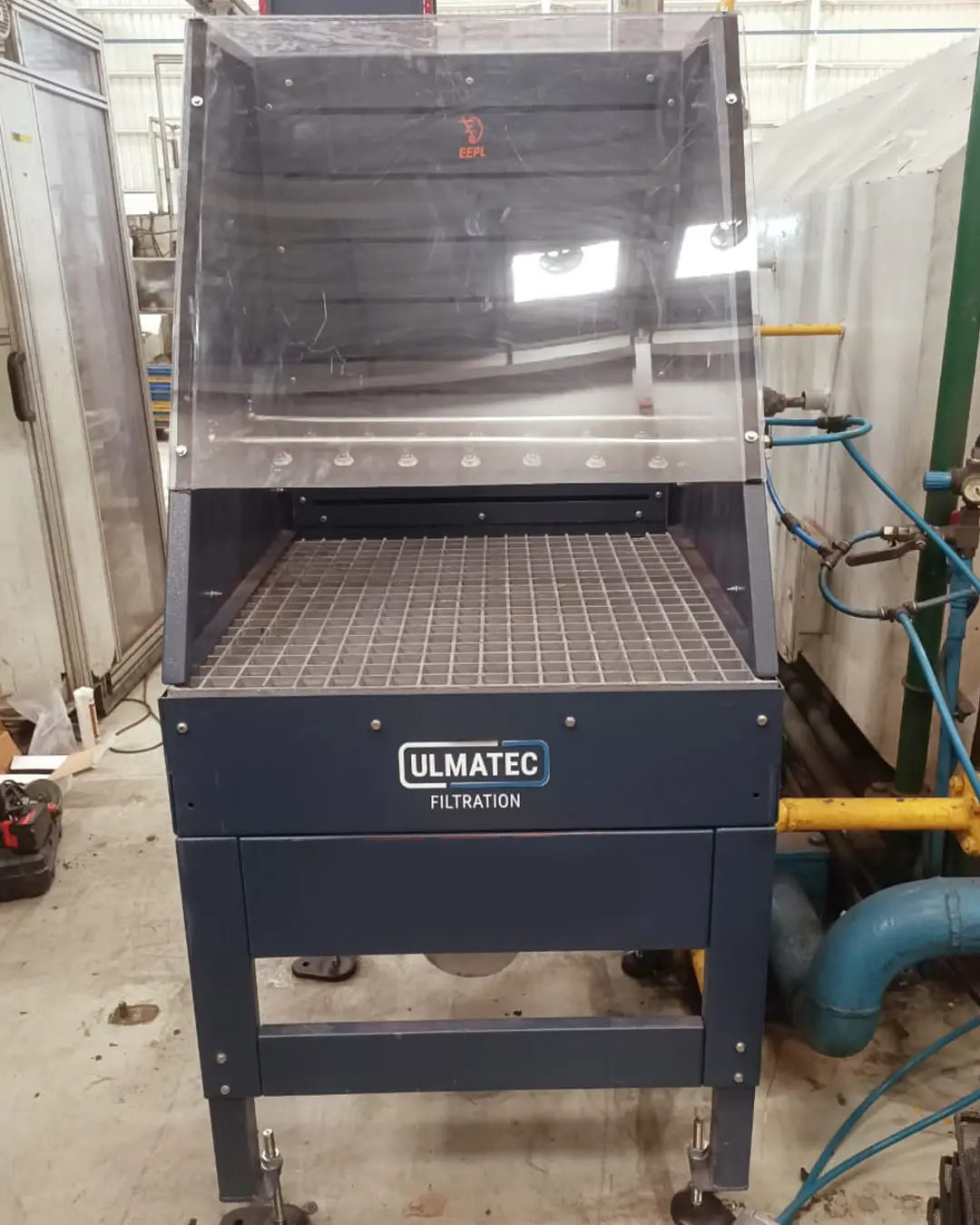
Downdraft table with inbuilt dust collector
When a workstation generates dust continuously — deburring, polishing, light grinding, soldering connecting to a central extraction system is not always practical. Ducting adds cost and complexity. Fixed installations limit where the bench can go.
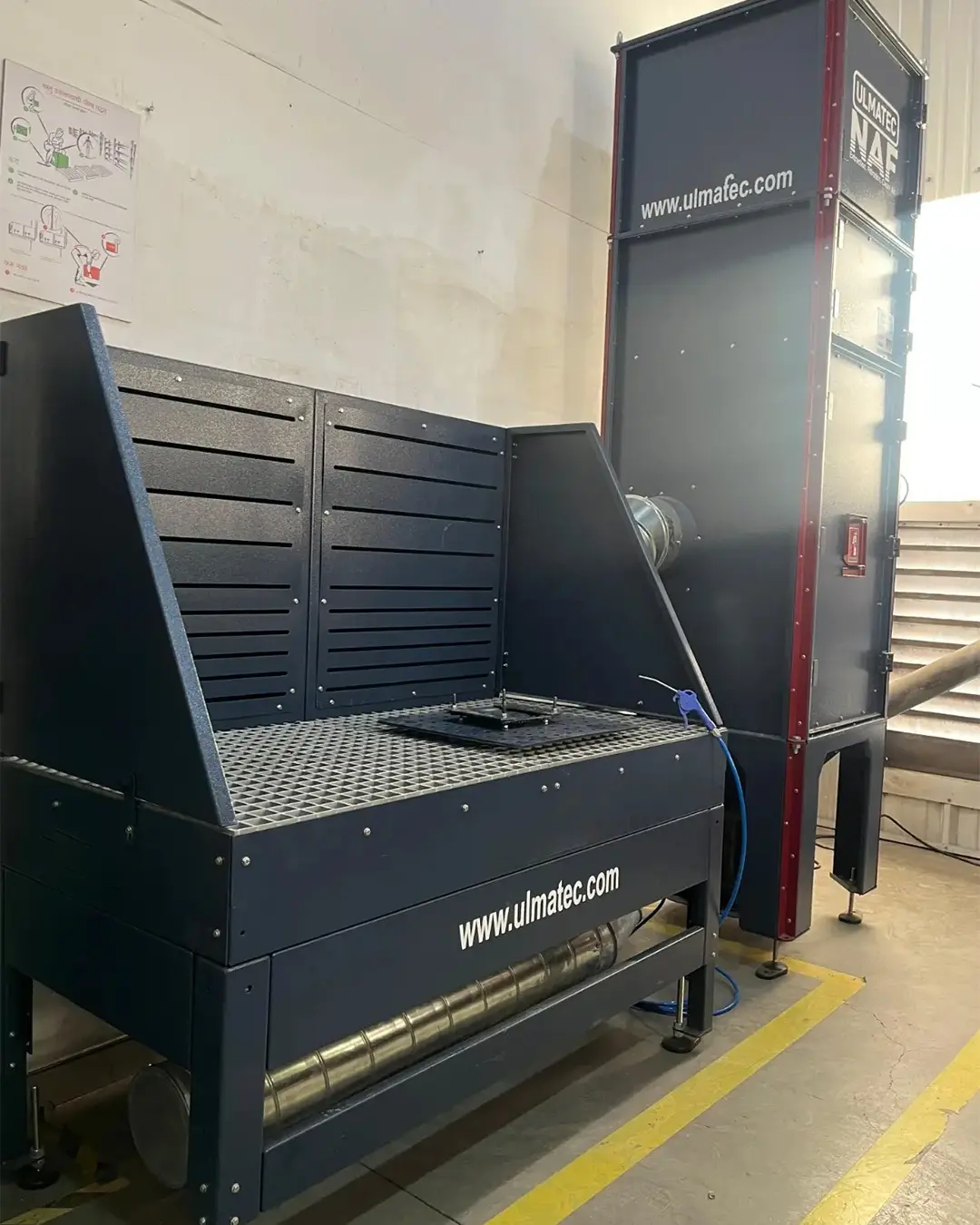
A downdraft table with an inbuilt dust collector removes both constraints. The filter sits inside the table itself: air is drawn down through the work surface, filtered within the unit, and returned clean to the room. No external filter unit, no ductwork, no connection to a central system required.
NAF Downdraft Tables with inbuilt dust collectors, built under licence from ULMATEC GmbH and manufactured in India, are self-contained, modular, and configurable for the full range of bench-based industrial processes.
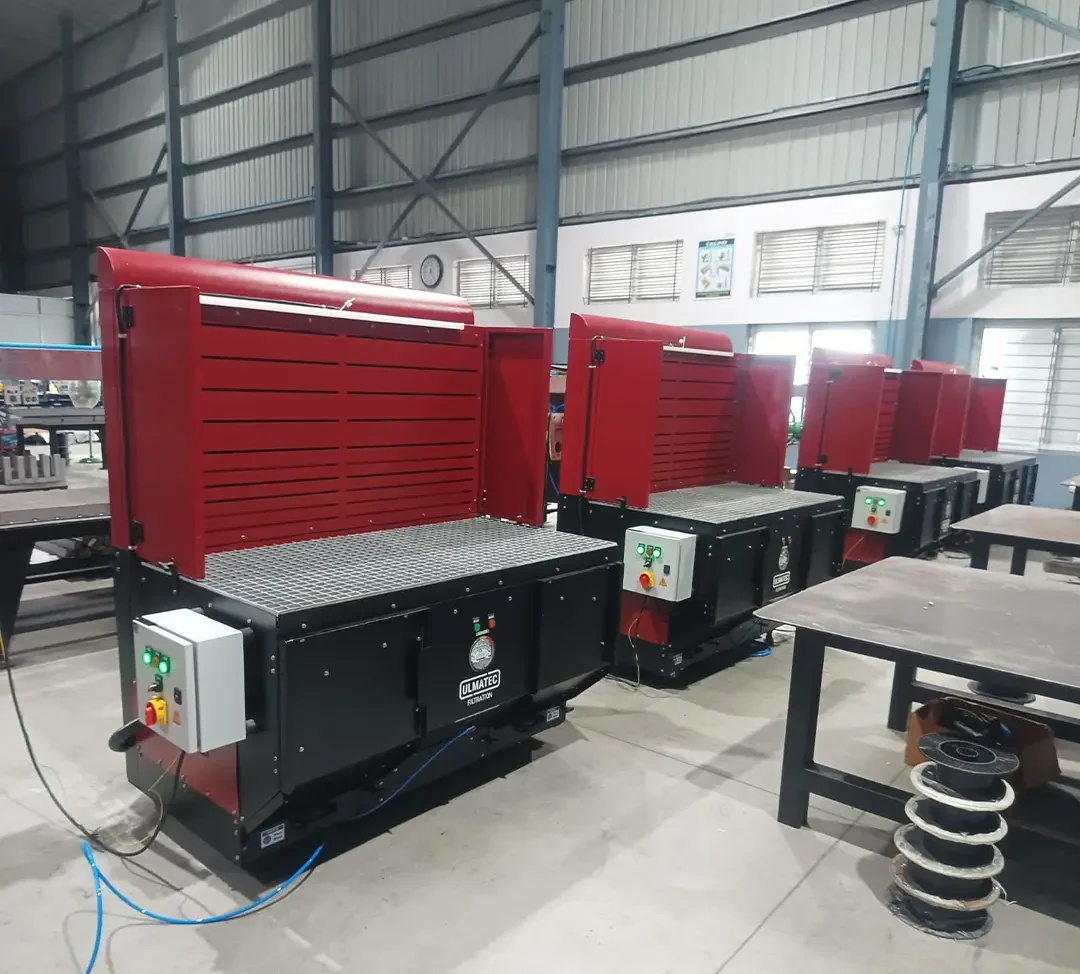
Extraction built into the bench
Capture follows the work
Air drawn downward through the table surface captures dust, chips, and fumes wherever the process is happening, without repositioning an arm, adjusting a hood, or interrupting the work. Segment monitoring activates extraction only at the section in use, saving energy without sacrificing coverage.
Modular from 750 mm upward
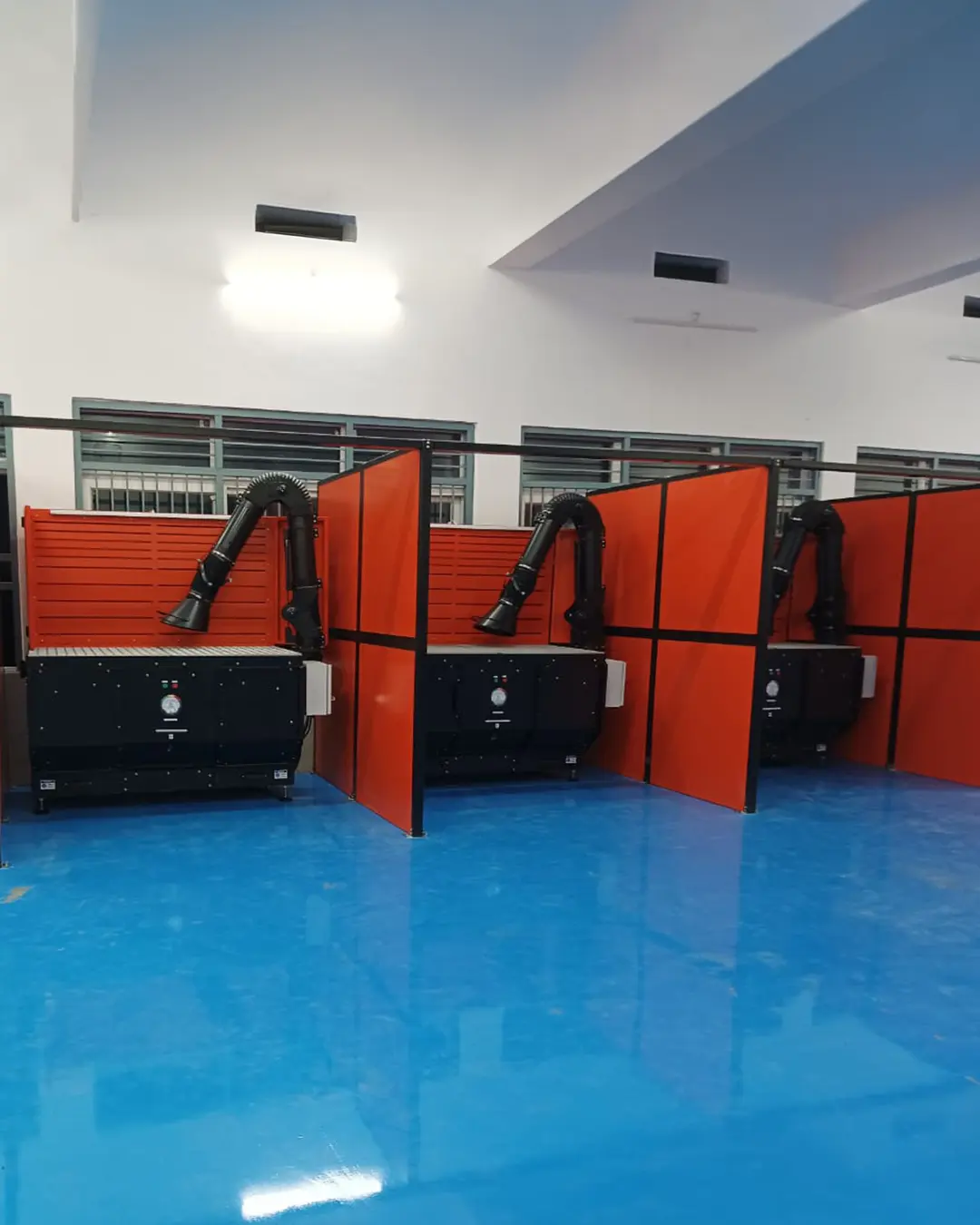
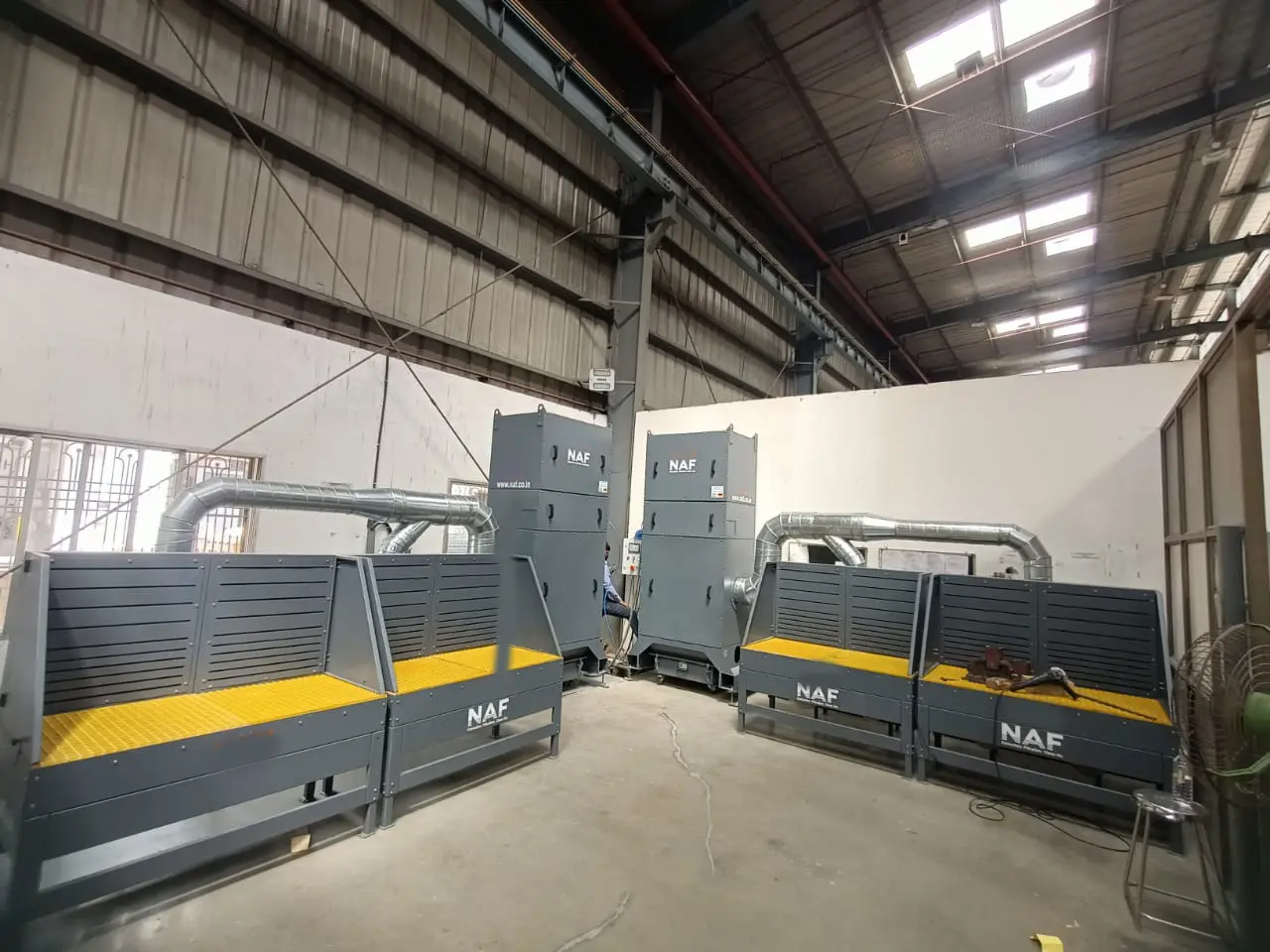
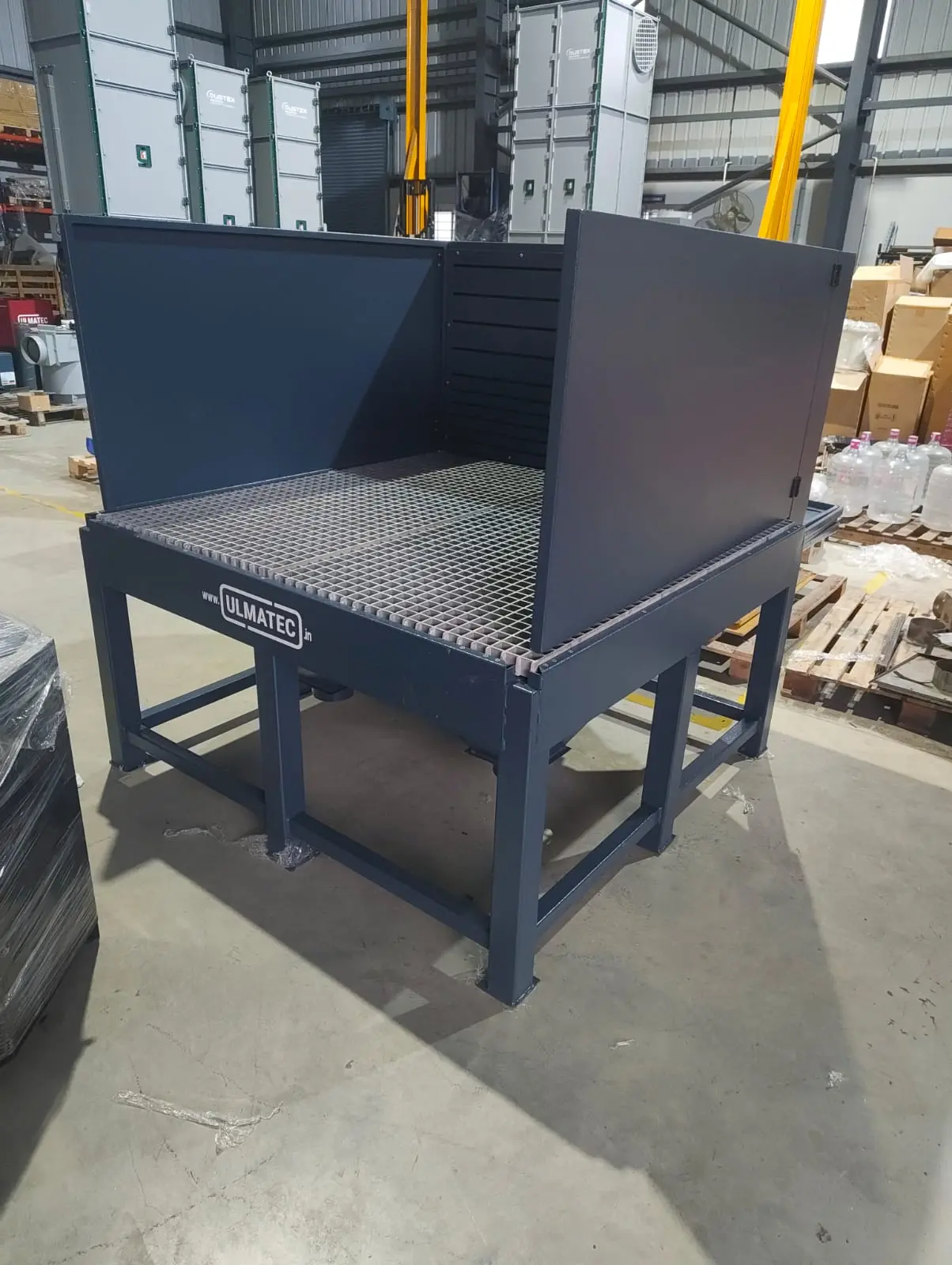
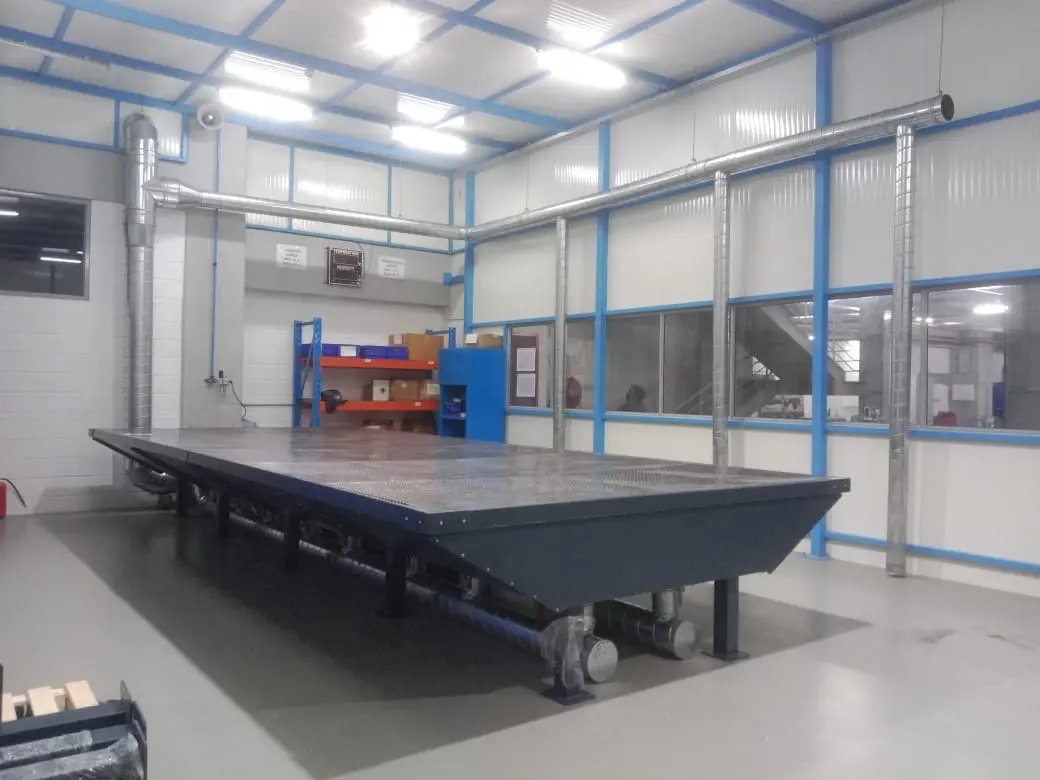
Tables start at 750 mm wide and expand in 750 mm segments configured as individual workstations, connected in series, or arranged as work islands. Static load capacity upto 3000 kgs available. Height-adjustable for ergonomic fit.
Matched to your process surface
Grid grate for coarse grinding and deburring. Wood surface for gentle finishing. Plasma-cut surface for cutting processes. Anti-static plastic surface for electronics assembly and soldering. The surface is specified to the process.
Downdraft Table in action!
Key advantages
Workstation-level capture
Emissions extracted at the workpiece before they rise to the breathing zone. No repositioning as the work moves across the surface.
Segment monitoring
Sensors activate extraction only at the segment being worked on and energy-efficient, with no reduction in capture performance.
Modular expansion
Tables connect in series or configure as work islands, starting at 750 mm width, expandable in 750 mm steps to any required length.
Heavy-duty capacity
Static load up to 3,000 kg handles large workpieces.
Four surface types
Grid grate, wood, plasma, or anti-static plastic, matched to your process.
Special Accessories
Such as benchwise, rotary table, lighting, torch & tool holder
German engineering, for Indian Factories
NAF Extraction Tables are built under a licence partnership with ULMATEC GmbH and manufactured in India. Table performance depends on airflow geometry, surface design, and how well the table integrates into the broader extraction system.
ULMATEC’s modular design refined across metalworking, electronics, aerospace, and woodworking keeps capture efficiency consistent across the full table length, even in extended configurations. Segment monitoring, rear wall hoods, and lateral air guide panels are standard engineering features. NAF delivers that engineering at a price that makes workstation-level capture viable for every bench in your facility.
ULMATEC GmbH licensed technology
German design, manufactured in India
Modular from 750 mm, expandable in 750 mm steps
Load capacity up to 3,000 kg static
Special Accessories such as benchwise, rotary table, lighting, torch & tool holder
What buyers ask before they decide
What processes are extraction tables best suited to?
Grinding, deburring, soldering, welding, polishing, blowing out, dosing, cleaning, and mechanical processing and any bench-based process where the work moves across the surface and a fixed arm or hood would need constant repositioning. They are particularly effective for soldering in electronics, deburring in metalworking, and grinding at individual workstations.
How does segment monitoring work?
Sensors detect the section in use and activate extraction only at that segment, saving energy with no reduction in capture performance.
Are extraction tables available with an integrated filter unit?
Yes. Tables can be specified with a connected filter unit as part of the configuration.
Can extraction tables be combined with hoods or extraction arms?
Yes. Rear wall hoods and lateral air guide panels are standard features, and tables can be combined with hoods or arms where the process needs it.
Are ATEX-rated extraction tables available?
Yes. Explosion-protected configurations are available for combustible dust such as aluminium and magnesium grinding.
How do we get pricing?
Tell us your process, workstation size, and filter setup. We return a complete specification and clear pricing.
Put the capture point where the work happens
Tell us your process, workstation size, and filter setup. Our team configures the right NAF Extraction Table; surface, segments, accessories, and connection and gives you clear pricing, whether you’re adding a single bench or specifying a full production line.
Or call us directly: +91 63745 22593